Unlocking the Educational Benefits of Escape Room Obstacles
Incorporating retreat area challenges right into educational structures presents a special opportunity to improve essential thinking, promote team effort, and create analytical abilities among trainees. By merging entertainment with education and learning, retreat rooms not just improve student involvement however additionally prepare them for future challenges, calling for durability and collaboration.
Enhancing Critical Thinking
Retreat area challenges function as a engaging and dynamic tool for improving essential believing skills. These immersive experiences call for individuals to address a series of problems and riddles within a set duration, promoting an atmosphere where cognitive skills are carefully tested and established. The nature of retreat rooms requires a methodical method to problem-solving, motivating individuals to examine details critically, acknowledge patterns, and draw rational conclusions.
Individuals in escape room difficulties are usually faced with complex problems that require innovative solutions, consequently promoting association of ideas. This sort of thinking is necessary for determining links between seemingly unrelated ideas and for producing innovative remedies. Additionally, the stress of a ticking clock adds an aspect of necessity, pressing individuals to think both promptly and properly.
In addition, retreat area obstacles typically integrate a range of problems that interest various cognitive toughness, such as sensible thinking, spatial understanding, and mathematical abilities. This diversity guarantees that individuals work out a wide range of mental professors, which is vital to extensive cognitive advancement. Essentially, retreat rooms create a stimulating atmosphere that not just delights yet also grows crucial crucial believing capabilities, making them a beneficial educational tool.
Promoting Team Effort
Collaborating successfully is a crucial element of success in getaway space difficulties, as these activities inherently demand partnership amongst individuals. The structured atmosphere of a getaway space requires that individuals pool their diverse abilities, expertise, and perspectives to address intricate troubles within a restricted duration. This collective approach fosters an understanding of the importance of each employee's payments, thus improving interpersonal abilities and common regard.

Furthermore, the immersive and interactive nature of escape rooms provides a sensible, hands-on experience that enhances academic concepts associated with teamwork - escape room orlando. It allows individuals to exercise and fine-tune vital soft abilities, such as management, active listening, and conflict resolution. Because of this, getaway area tests not only make finding out enjoyable but additionally prepare trainees for future real-world scenarios where synergy is vital
Establishing Problem-Solving Abilities
Establishing problem-solving abilities through retreat space obstacles uses a appealing and one-of-a-kind technique for honing moved here critical assuming abilities. These interactive settings present participants with a collection of detailed challenges and scenarios that call for logical and innovative methods to solve. By browsing these difficulties, people are forced to think outside package, adapt quickly to brand-new information, and use rational thinking in real-time.
Retreat rooms replicate facility, real-world problems within a controlled setup, permitting participants to exercise organized problem-solving processes. This includes recognizing the problem, gathering appropriate details, creating possible remedies, and reviewing these options to select one of the most reliable one. Such workouts are important in specialist and scholastic contexts, where organized problem-solving is a vital ability.
In addition, escape rooms encourage participants to embrace failure as a learning opportunity. The iterative nature of attempting and revising techniques fosters resilience and persistence, vital qualities for efficient issue solvers. This hands-on experience likewise improves cognitive versatility, enabling individuals to shift perspectives and method problems from multiple angles.
Encouraging Energetic Understanding
Energetic discovering is significantly promoted with the immersive experience of getaway area obstacles. By incorporating puzzles and jobs that line up with curricular objectives, getaway areas force students to use academic understanding in practical situations.
Moreover, retreat room difficulties encourage cooperation, vital reasoning, and imagination, every one of which are vital parts of active understanding. Participants need to communicate successfully, purposeful on possible solutions, and assume outside the box to proceed through difficulties. This dynamic atmosphere boosts intellectual curiosity and encourages students to discover different viewpoints and approaches.
Boosting Trainee Involvement
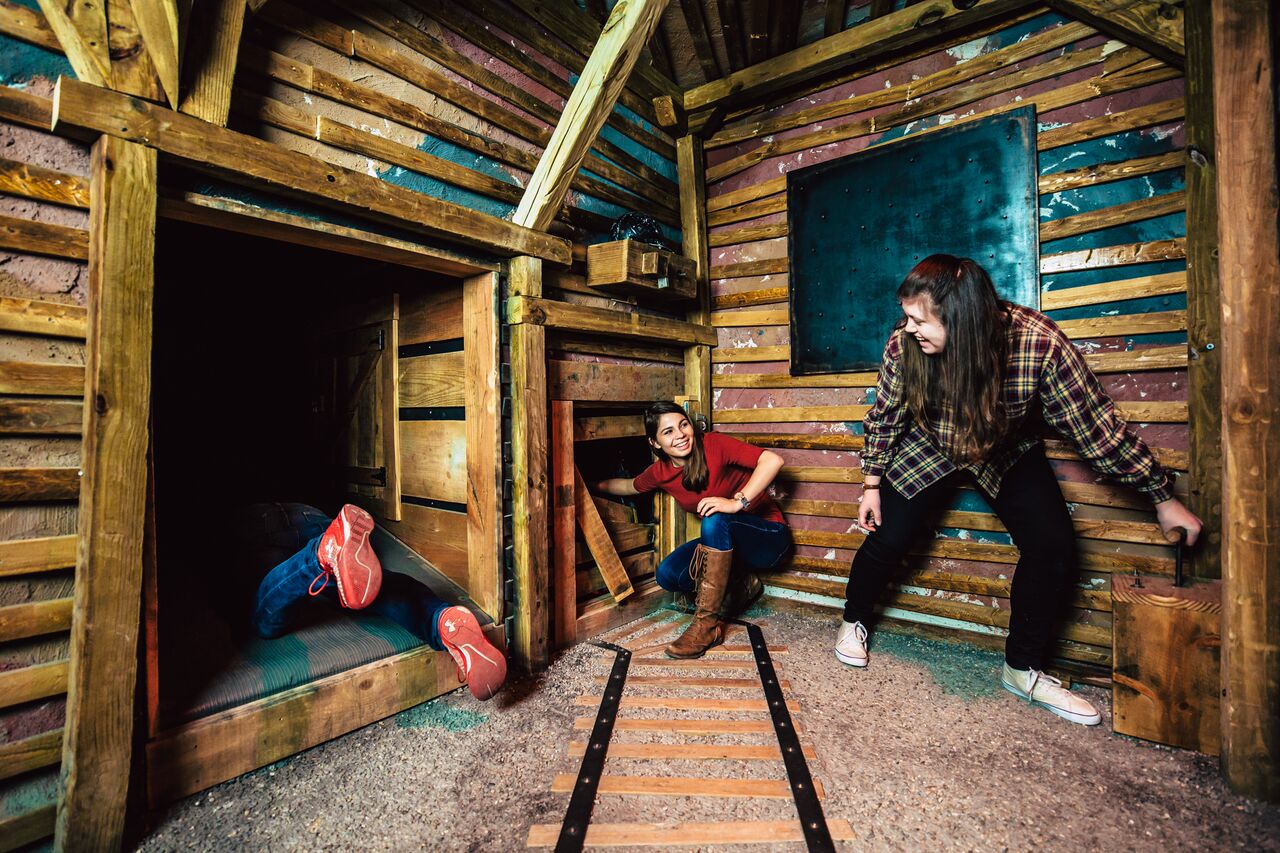
Involving trainees in the discovering process is vital for academic success, and leave room challenges offer an engaging remedy to this instructional imperative. These interactive experiences record pupils' interest with immersive scenarios that require active engagement, essential reasoning, and partnership. Unlike conventional classroom approaches, getaway rooms change finding out into a dynamic procedure where trainees are not passive receivers however active problem-solvers.
The hands-on nature of getaway area difficulties fosters a sense of seriousness and enjoyment, which can considerably boost trainee motivation. When pupils are engaged in a story that needs them to resolve puzzles and get rid of obstacles, they are more probable to spend effort and excitement into the understanding tasks. This enhanced engagement can bring about deeper understanding and retention of the material, as pupils are required to apply their expertise in real-time scenarios
Moreover, the collaborative aspect of retreat areas advertises team effort and interaction skills. Integrating escape room obstacles right into academic settings this post can be a powerful strategy to boost pupil involvement and drive academic success.
Conclusion

Integrating escape area difficulties into instructional structures presents an unique possibility to improve crucial thinking, advertise team effort, and establish problem-solving skills amongst trainees. As a result, retreat room tests not only make learning satisfying however also prepare trainees for future real-world scenarios where team effort is important.
Engaging trainees in the learning process is critical for scholastic success, and escape area challenges use a compelling option to this educational critical. Integrating retreat space challenges into instructional setups can be a powerful method to elevate pupil interaction and drive scholastic accomplishment.
The vibrant nature of retreat rooms successfully equips trainees with crucial skills for scholastic and real-world success, ultimately enhancing the instructional experience and preparing students for future challenges.